
Blockchain: useful or another NASA pen?
There is a famous rumour about the space race in which the US spent millions of dollars developing a special anti-gravity pen so the astronauts could take notes in space without difficulty.
The Russians just used pencils.

This story is used as a joke and as a cautionary tale: Beware the unnecessary expenses of the middle management.
The blockchain hype has been developing for years. It’s the panacea of the data world. The solution to every business, organization or nation. The middle management eradication.
Can you imagine a world without lawyers, banks or administrators?

What is Blockchain?
A blockchain is a single registry, agreed and distributed in several nodes of a network
Each block stores:
- a number of valid records or transactions
- information regarding that block
- its linking with the previous block and the following block through the hash of each block - a unique code that would be like the block’s fingerprint.
Therefore, each block has a specific and immovable place within the chain. That is its blessing and its curse.
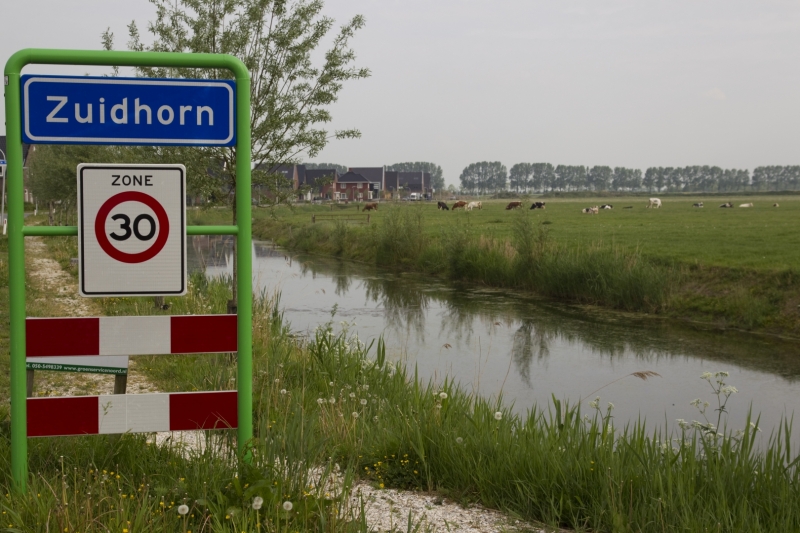
In 2018 the small town of Zuidhorn in the Netherlands decided to take their chances with blockchain. A tech enthusiast named Maarten Velthuijs promised a very new, complex and functional system for a poverty aid program.
What in the past would have been a bureaucratic nightmare turned into a simple code that each family could scan and get their bicycles, theatre tickets and other benefits.
The tiny town of Zuidhorn was suddenly on the map and won multiple prizes and awards for being pioneers in municipal work. A lot of IT projects came along and they were seen as the model town for Europe
So, what’s the matter with blockchain?
The marvelous thing about the blockchain is that nobody is in charge. The problem with the blockchain is that nobody is in charge.
To make a complex matter easy: blockchain is a spreadsheet. A database with more steps. The thing is, nobody here is the head honcho. Nobody is in charge. Sure anybody can access and input data, but nobody can change or delete anything.
The most famous example of a blockchain is Bitcoin, the cryptocurrency that was invented in 2008 by an unknown person or group of people, using the name Satoshi Nakamoto. The premise was to avoid the middle management of banks involved in transactions, because they deemed them as not thrust-worthy.
You might wonder what the difference is.
Pretend you want to send money to your friend Paul. The bank knows how to do this. They check if your number exists, if Paul’s number exists, if there is enough money on the account and if it’s a viable transaction. All in all, the money gets from point A to B with almost no trouble.
Bitcoins work differently. You basically shout into a chat “hey, i want to send some money to my friend Paul” and the users (called miners) collect various transactions in little blocks.
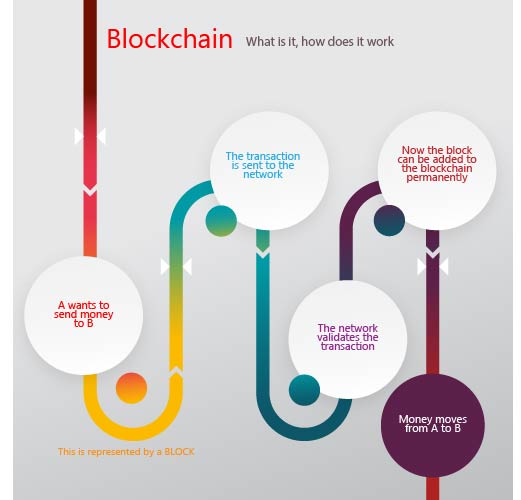
In order to add these blocks of transactions to the public blockchain ledger, the miners have to crack a complicated puzzle (actually, they have to guess a very large number from a very, very long list of numbers). Solving that puzzle takes about 10 minutes – and if it’s solved more quickly, for instance because people use more hardware to solve the puzzle, it automatically becomes more difficult.
Once it’s been solved, the miners add the transactions to the latest version of the blockchain ledger, in the version they have saved locally. They post an announcement in the chat: we solved it, see! Everyone can verify that the solution is correct, and everyone updates their own blockchain ledger. Voila! Transaction complete. As a reward for their work, the miners receive a handful of bitcoin.
Why a Puzzle?
In an idyllic world we wouldn’t need it. But in order to avoid fraud, swindles and cons, you need puzzles. The thing is, the banks know how to do stuff, they have been doing security measures and checks since they were invented back in the sumerian city of Ur. (i’m exaggerating, but you get the point)
I tell Paul. “hey, i’m giving you this money”. Ok then, somebody needs to check if it’s possible miners do the work that a bank usually does: they decide which transactions can be carried out.
Of course I could cheat and try to scam the system by being in cahoots with a miner, but other people could wise up and see that I’m spending the same money twice and they can refuse to update the blockchain, therefore the bad miner gets nothing after solving a difficult puzzle. Since it’s super difficult to guess the number or “hack it” (thanks 90’s movies) it pays to play by the rules.
This system is pretty inefficient. It would be much easier to just trust someone to manage your data. However, Satoshi Nakamoto thought the banks could just make your money disappear if they wanted to, so they invented bitcoin.
One problem bitcoin has is the amount of energy it requires to work. Pretend you have a ledger with your coins in it and you need to do a transaction. Since it is a public space you need to trust a miner. In order for a miner to be verified as a trusted party they need a “proof of work”. Proof of Work asks a miner to generate a token (nonce) by solving a puzzle. The nonce verification happens in less than a second.
After verification, the miner can edit the ledger and earn reward coins. This proof of work requires a huge amount of energy. The more people get into cryptocurrency, the more energy is spent in the PoWs.
Currently, Bitcoin and Ethereum are now using up the same amount of electricity as the whole of Austria. Carrying out a payment with Visa requires about 0.002 kilowatt-hours; the same payment with bitcoin uses up 906 kilowatt-hours. As cryptocurrency grows, so does the amount of energy required and its climate impact (think 1921 when they discovered that lead provided octane to gasoline).
Think of bitcoin as the Nasdaq. It’s charm is built around speculation. If you bought 20 dollars worth of bitcoins in the early days you could have enough money for a house nowadays.
This brings us to the blockchain. “Get rich fast” is a tested formula for hype. Add that to the mysterious world of technology and it sounds like a sure way to make bank. The people, specially managers and consultants, read about this magic internet currency everywhere and decide they need to get into that. The thing is… Bitcoin transactions have its downsides like how slow and expensive they are. But blockchain, on the other hand, is the magic behind bitcoin. That makes it cool, everyone wants to be the man behind the curtain.
Blockchain makes you believe you found the answer to everything. It generalises the bitcoin pitch: let’s get rid of banks, and also the land registry, voting registry, business registry, your grandma and everything that ends with “registry”.
We don’t need those, we have blockchain.
How come we are not using blockchain RIGHT NOW!? Let’s get into that!
The thing is, blockchain looks much better on a powerpoint presentation than it does in (money) paper. The Honduran land registry was going to use blockchain. Not anymore. The Nasdaq was going to use blockchain as well, but decided they didn’t need it. The Dutch Central Bank also noped out of that one.
Out of over 86,000 blockchain projects that had been launched, 92% had been abandoned by the end of 2017, according to consultancy firm Deloitte. Why? you might ask. Well, in some cases it might be like using a washing machine for just one sock.
What happened to little Zuidhorn then?
Funny thing is, if you check if there is a blockchain working in Zuidhorn, you’ll get a single sad miner working away, on a server, not connected to the internet. When asked about the blockchain project Maarten Velthuijs just seems to shrug it off. ““I don’t know. We keep trying to tell people, but it doesn’t seem to stick.”
The truth is, the small town’s poverty aid plan runs on a simple app, using very simple code, running on very simple databases. It works wonderfully too, but it doesn’t run on a blockchain. As we say in video games, a blockchain might be a bit of an overkill for certain projects.
But it’s the safest way to move data!
It might be, but it relies on the sincerity of the people. What happens if you enter faulty data on purpose?
Everytime humanity designs a way to make things work, a thousand ways to cheat will be invented as well. The big problem is the insincerity of humans. Remember the whole hassle about the puzzle and bitcoin? That’s because people cheat and lie. But you can’t do anything about faulty data. And as we said before, you can’t even correct it.
Let’s say I’m an animal importer and I register a bunch of pigeons as rare and exotic peacocks. I just hassled you.
Some people have suggested using blockchain for land registry. That would solve a lot of problems in corrupt administrations, right? Technically yes, a lot of buildings just sprout in places with no land registry but blockchain can’t do anything about it.
But a blockchain is a database – it’s not a self-regulating system that checks all data for correctness. So, if you input garbage, that’s what you are going to get later.
So, yes, this is why you still need supervisors, administrators and lawyers. I’m sorry that utopic world where you don’t need them still doesn’t exist.
Where is blockchain now?
There has been other Zuidhorn-like projects
My Care Log, for example, was another award winning experiment. Basically, it is a Dutch database for newborn babies and their maternity care. What used to be another bureaucratic nightmare got sorted into a convenient phone app where you could see how much care you have received and how much you have left.
This app uses verified and exclusive miners to validate this data. Doesn’t that make it a very normal database? The answer is: yes.
Are you saying I should never use blockchain?
Bear with me, I know I have told you multiple times why you shouldn’t use blockchain, but hear me out: it has done a lot of good too.
After Zuidhorn there was a hype to automate and modernize and make every database better.
We never really think in all the work it goes behind the most mundane projects. We are always saying we need to “modernize” all our processes and documentations, especially databases. Well, all the blockchain hype has made us pay attention to this particular problem.
Do you think we can magically automatizate all of the government’s data? no, we need some crazy ideas first.

When trains were introduced to the general public, they were afraid women uteruses would come out flying from their bodies because of the high speed, but those were just baseless fears that were soon out of the windows themselves.
Yes, blockchain is really new. Yes it has been elevated to some sort of automatization messiah. and yes, it isn’t really there yet. But everything needs to start somewhere.
Smart Contracts. The smartest way to use blockchain
For example, blockchain has actually done a lot of good with smart contracts.
Remember how I said the blockchain problem is that it can’t be erased or tweaked? Well that’s actually really good for contracts!
Imagine a world where everyone respects payment times, contract clausules and job obligations. That’s what a smart contract can provide.
A smart contract also can be regarded as a secured stored procedure as its execution and codified effects like the transfer of some value between parties are strictly enforced and can not be manipulated, after a transaction with specific contract details is stored into a blockchain or distributed ledger. That’s because the actual execution of contracts is controlled and audited by the platform, not by any arbitrary server-side programs connecting to the platform.
Take RSK for example. A company that supplies secure smart contracts and whose blockchain is secured by Bitcoin hashing power through merged mining. RSK uses GHOST to achieve average commit times between blocks of 10 seconds. The maximum transactional capacity for simple payments is estimated at approximately 400 transactions per second.
In conclusion, blockchain might have been the very expensive pen that NASA spent millions developing, but it got better over the years. Meanwhile, the russian pencil’s lead and chips became a danger to the spaceship.